Thursday, January 30, 2025

Homily on the Feast of St. Bridget of Ireland


Great Lessons From St. Bridget Of Ireland

Rev. Marcel Divine Emeka Okwara, CSsR

Homily on the Feast of St. Bridget of Ireland

Church of St. Bridget of Minneapolis, MN

Sunday, February 2, 2025


Today, the Church celebrates the Feast of the Presentation of the Lord. But it is also the Sunday we celebrate in a special way our dear patron, St. Bridget of Ireland. Because of the uniqueness of today, I will like to share some of the key lessons we can learn from St. Bridget. Saints in heaven are saints because they were first saints on earth. If you want to be a saint in heaven, you must first be a saint here on earth. So, how did St. Bridget become a saint?


We live in a world where selfishness and greed are the order of the day. Greed indeed is an incurable disease that only the good God can cure. People don’t complain, don’t protest and don’t frown until something hits them directly and personally. But waiting until something affects you personally before you stand up and oppose it is not Christianity. In the case of St. Bridget, we are told that she had a deep compassion for the poor and the marginalized. She was renowned for her unwavering care towards the poor, the sick, and those on the fringes of society. In the course of her life, she emphasized the vital importance of actively reaching out to help others without expecting anything in return. That’s what saints do. They give and give expecting nothing but the Lord. For the saints, the greatest treasure is not silver and gold but the Lord alone. For St. Bridget, what matters is not awesome power but awesome service to others especially the most vilified and maligned in the society. If you want to be a saint in heaven like St. Bridget, start being a saint today by caring for those who need our help the most.


St. Bridget was also known for her generosity and hospitality. She was known for welcoming all people with open arms, sharing what she had with others, and creating a space of hospitality for those in need. What does generosity really mean? It means mercy. If you have experienced the loving mercy of God, allow others to also experience the same through you. If you have felt the providential hand of a loving God, become a vehicle, a conduit through which others experience the same love and mercy. Give to others everything you have received from God. You know, everything God gives you including your life is not for keep. We are given to give. My life is not about me and what I want. It is primarily about God, then others and then me. Take this to the bank: if you want real joy in your life, the word “JOY” has to be an acronym you live by. “J” then stands for Jesus, “O” for others and “Y” for you.” If you want to be a saint in heaven, like St. Bridget, actively welcome people that God brings to your space. Don’t ignore them. Don’t avoid them. Open your arms to them. That will make you a saint.


The great St. Bridget was also known for her prayer life. But beyond prayers, her faith was manifested through her actions. She actively sought to alleviate the suffering of others and lived out the teachings of Christ through her daily life. Saying your prayers frequently is a great Christian virtue and habit, but in prayer, do you encounter Jesus who said, “Whatsoever you did for the least of my brethren, you did to me?” If your prayer life does not lead you to an encounter with this Jesus, something is really missing. During his public ministry, Jesus practiced open table fellowship, he actively reached out and brought back those in Israel who had been disenfranchised— the poor, the sick, lepers, prostitutes, the blind, tax collectors. By gathering the tribes, Jesus announces his disapproval of the ugly game of insiders versus outsiders. As far as Jesus is concerned, no one is an outsider, rather all God’s children are insiders. Do you want to be a saint in heaven? Begin now by being a saint on earth. Show compassion to those on the fringes of society. 


St. Bridget created what we have come to know as St. Bridget’s Cross. Why? She wanted a tangible symbol that will help her share her faith and connect with others. She knew there is nothing like “private faith.” We cannot privatize faith or make it something we do when we are only in church. Authentic faith is lived out. It is shared with all and sundry. Finally, despite her influence and miracles, St. Bridget remained humble and focused on serving others. By concrete example, she demonstrated that true power lies not in dominating and controlling others but in selfless acts of service. What truly makes a person great? Who is a great person? Is it that individual that bullies others? No! Is it that person that dominates and terrorizes others? No! Is it that person that uses power to make his presence known? No! A great person lives for others. If you want to see the greatest person ever, take a look at the cross. What’s Jesus doing on the cross? He is setting us free. He is drawing all people to God, and by drawing people to God, he draws them together. 


Sisters and brothers, this is our patron saint. If we want to be saints in heaven, this is what we have to do on earth. 


God bless you!

Homily on the Feast of the Presentation of the Lord


Mother And Child United By One Fate

Rev. Marcel Divine Emeka Okwara, CSsR

Homily on the Feast of the Presentation of the Lord

Church of St. Bridget of Minneapolis, MN

Sunday, February 2, 2025


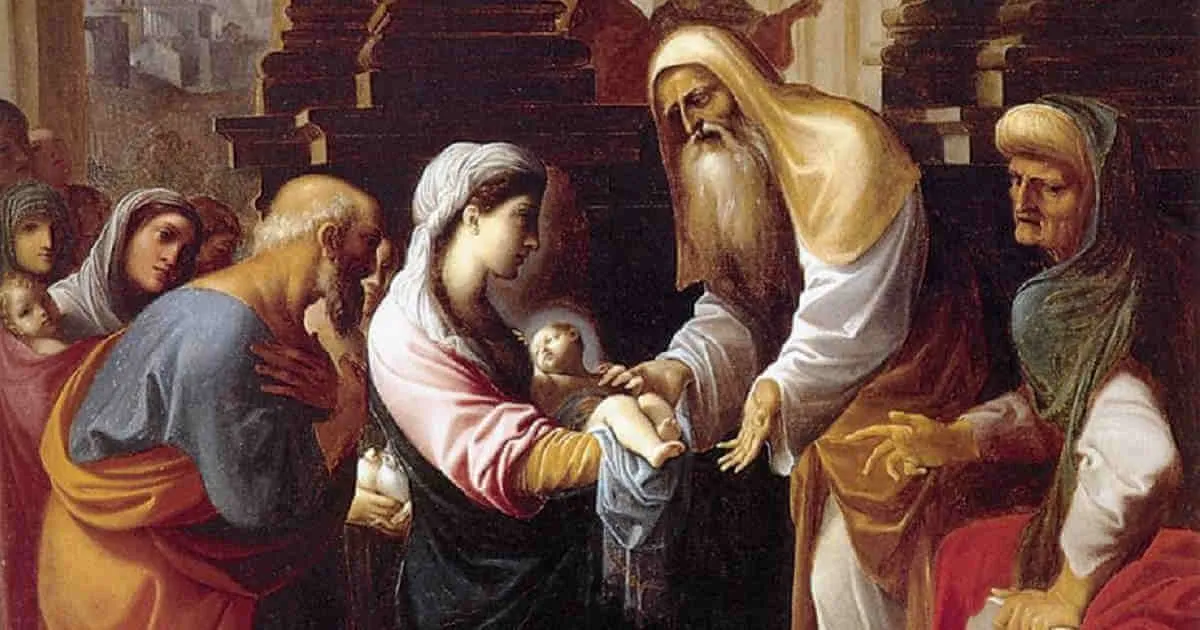
Today we celebrate the Fourth Joyful Mystery— the Presentation of the infant Jesus in the Temple. In fulfillment of the law, Joseph and Mary took the infant Jesus to Jerusalem. Upon entering the temple, they met two godly and prophetic figures, Simeon and Anna, who for many years, had been praying and waiting for the Messiah. The Jews were expecting a messiah that would make all their socio-political problems go away. At the time, Israel was under the political control of Rome. Now, being controlled and governed by a foreign government was not new to Israel. They had experienced it before in Egypt. But, this particular submission was uniquely terrible and painful for them because they were living in their land and being governed by a pagan government in Rome. So, they were expecting a Messiah who would come on a rescue operation. But instead he came in riding on a donkey. As the Son of God, he could have come with legions of Angels, with power and might. But he came humbly. He rode into the city of Jerusalem riding on a donkey. And guess what? He continues to do so till today. 


So, when Mary and Joseph came into the temple to perform the custom of the law in regard to the infant Jesus, the upright and devout Simeon was on hand to receive them. He was in the temple at the rightest of time. Of all the times and hours he had been in the temple to pray and worship, this particular one is the most signifiant. He had been promised by God that he would not see death until he had seen “the Christ of the Lord.” That promise was fulfilled at this event. Simeon was in the Spirit when Mary and Joseph brought in the child Jesus, and it seems he did not even wait for the parents to do what brought them all the way from Nazareth to Jerusalem before he took the child into his arms and began to bless God and say:


“Now, Master, you may let your servant go in peace, according to your word, for my eyes have seen your salvation, which you prepared in the sight of all the peoples; a light for revelation to the Gentiles, and glory of  your people Israel.” 


Friends, in the words of his prayers, Simeon, presents Jesus to Jews and Gentiles alike. He also presents him to all the people of the world. In his prayer, Simeon testifies that what he has seen will bring light to Gentiles and glory to Israel. The child is a manifestation of the glory of God and a visible sign of God’s saving presence. However, shortly after those joyful words, Simeon turns to Mary and foretells of a future sorrow: 


“Behold this child is destined for the fall and rise of many in Israel, and a sign that will be contradicted— and you yourself a sword will pierce— so that the thoughts of many hearts may be revealed.” 


In those words, the holy man, Simeon, speaks about the fierce opposition that Jesus will face. He tells the child’s mother that the grief she will undergo will be so great that it will pierce her very being. As if to soothe Simeon’s prophecy, prophetess Anna walks in and begins to thank God and speaks to all who have been waiting for the redemption of Jerusalem about the child. After Mary and Joseph had fulfilled the prescriptions of the Law of the Lord, they returned to their own town of Nazareth in Galilee where Jesus “grew and became strong, filled with wisdom; and the favor of God was upon him.” 


Mary and Joseph understood that their baby, Jesus, had to be brought to the Temple, not to be redeemed like every other male child that opens the womb, but to be offered to God as a true sacrifice. It was in the process of offering her Son to God that Mary learned that she too will share closely in Jesus’ redemptive mission. She learned that her fate and that of her son are tied together. The good news is that this Jesus is also presented to us as our Savior and salvation. He is the Light of the world, the manifestation of the glory of God, and the visible sign of God’s saving presence. He is God in the flesh, Yahweh moving among his people. He is the Lamb of God who would redeem all people from their sins.

Tuesday, December 17, 2024

Homily for the Feast of the Holy Family


Love Even The Most Difficult Ones

Rev. Marcel Divine Emeka Okwara

Homily for the Feast of the Holy Family

Church of St. Bridget of Minneapolis, MN

Sunday, December 29, 2024


The feast of the Holy Family of Jesus, Mary and Joseph is a good time to think about  some relatives—mom, dad, brother, sister, uncle, aunt, niece, nephew, cousin etc. who for some reasons don’t have it all put-together, whose lives have gone off kilter, who don’t quite fit in. As a result, the rest of the family considers them as failures and feels embarrassed when they show up in a family gathering or reunion. What should we learn from the idea of family? First lesson, none of us chooses the family to be born into or the people to be born with. But no matter who they are— saints or sinners, great or not-so-great, prominent or obscure, wealthy or pauper, grace-filled or source of embarrassment, beautiful or ugly etc. we are called to love them. The notion of family is that  we don’t choose the people we love.


In my immediate family and extended family, I have wonderful people, very lovable, very admirable, and worthy of emulation. They have amazing qualities of friendliness and easy going. But I also have relatives who are difficult to deal with. I have an elder sister, on the one hand, she is success driven. She has done so well to raise her children. She was nice when we were growing up. But since we all became adults, her relationship with the rest of the family has been an uneasy one.  She just has this difficult personality for any of us to handle. Multiple times I had intervened and spoken to her about how she is alienating the rest of us from her. But it always falls on deaf ears. Do I still love this my sister? Absolutely! I have no option. For a Christian, loving the other especially difficult people is not an option. You know, the easiest thing to do with difficult members of the family is to say, “I don’t want to deal with them anymore.” But in our family, God gives us people he wants us to love, whether they meet our expectations or not. More to it, what makes our family holy is that we are able to love not only the ones that are easy-to-get-along, successful, amiable but also the difficult and off-putting ones. That they are members of our families means that God has given them to us to love. 


When God became human, God entered into a family. The Blessed Mother and St. Joseph are two of the greatest saints in our great tradition. They were the most intimate members of Jesus’ family. But have you ever wondered what the cousins and second-cousins of the Blessed Mother are like? Do you think there were some unpleasant figures in her family? What about Joseph? Did he have some irregular figures in his family? You betcha! Did Jesus have some cousins who did not treat him nicely, who probably considered him weird and avoided him? Most probable! If you read the genealogies of Jesus in the Gospels, you will find heroes and people of questionable characters too. The point is, and that’s the second spiritual lesson, God saw fit to enter into such a family. Jesus had a series of human ancestors, and like most families, they were kind of a mixed bag, But God loved them still, just as he loved the heroes. That’s the reason why we are called to love those that God has given us to love. Don’t only love those who are exceptional, who have been helpful, who have been successful in life. Love as well those who have gone off-kilter. They are not perfect, they are not angels, but God loves them still. Being a Christian includes loving such people too as much as you love the incredibles in your life. On this feast of the Holy Family of Jesus, Mary, and Joseph, remember to pray for your family members especially those others you are not really proud of. 


God bless you!


Wednesday, December 11, 2024

Homily for the Third Sunday of Advent, Year C


Confession: The Most Real Way To Receive Mercy

Rev. Marcel Divine Emeka Okwara, CSsR

Homily for the Third Sunday of Advent, Year C

Church of St. Bridget of Minneapolis, MN

Sunday, December 15, 2024


In our Last weekend Gospel, we hear that the word of God came to John the Baptist in the desert. Why in the desert? It is a place where there is hardly any distraction. The desert is the cure for what Blaise Pascal called in his beautiful French “divertissement,” diversion in English. After that, we hear “John went throughout the whole region of the Jordan, proclaiming a baptism of repentance for the forgiveness of sins” (Luke 3:3). Having heard the powerfully challenging and transformative message of John, the crowd reacted, “What should we do?” (Luke 3:10) Check this out! John the Baptist is described as wearing animal skins and eating weird food like grasshoppers and honey (Mark 1:6), yet it is to this strange and emaciated man that many people were going to. What’s taking them to him? To listen to him and to confess their sins! You know, one of the first things I noticed as soon as I started my pastoral ministry in America is that while the communion lines are always long, the confession line is way too short. At Mass, everybody comes forth to receive communion, but when it comes to the sacrament (confession) that actually prepares us to worthily receive communion, we stay away from it. I know that before Vatican II, sin was overemphasized far above the mercy of God. That was a theological and homiletical mistake. But immediately after Vatican II, we have gone to the other extreme of de-emphasizing sin. Today, the stress is on God’s goodness, God’s grace, and God’s mercy. That’s in order. That’s true. The Catholic Church believes in the primacy of grace. Grace always comes first. In this letter to the Romans, the great St. Paul says “God proves his love for us in that while we were still sinners Christ died for us” (Romans 5:8). So, it is God who first comes to us, and not the other way round. However, there is no serious biblical figure who does not come to grips with our sin. It is so true to say that the entire Bible, from Genesis to Revelation is the story of God’s love and God’s quest for the human race. However, the awfulness of sin is never ignored in the Bible. It is mentioned in every page of the Bible. The amazing Vatican II never in any way discouraged Catholics from going to confession. What caused the sacrament of confession to suddenly fall off the table overnight is the misreading, misinterpretation and misunderstanding of the Council documents by people who ought to know better. Prior to the Council, people regularly went to confession. But today, not so much. 


But as we can see in today’s Gospel (Luke 3:10-18), people who came to John came not only to listen to him but to also do something very different. Hence the question, “What should we do?” In Matthew’s Gospel, we hear that Jerusalem, all Judea, and the whole region around the Jordan were going out to John the Baptist, were being baptized by him in the River Jordan and were confessing their sins (Matthew 3:5-6). I tell you, there is something very healing, very liberating and very satisfactory about the confession of sins. Last Sunday, I spoke about the different ways our culture tells us “we are okay,” “everything is fine,” “there is nothing wrong with us.” The culture makes excuses for us. In fact, it normalizes sins. In some ways, it celebrates sins and strips away the remorse, regret and penitence that ought to follow sin. The culture tries in a number of ways to justify sins. That’s the reality of our life today and everyone of us is susceptible to these suggestions coming from the culture. But the message of John is: don’t listen to those voices. The message of Jesus is: don’t listen to those voices. Deep down, we know we are sinners. Deep down we know there is something wrong with us. Deep down we know all is not right with us. As such, there is something profoundly healing and liberating about being able to confess our sins. One of the great moments of my life happens after I have confessed my sins. 


Sisters and brothers, avoiding going to confession is not good at all. You are toying with your salvation if you stay away from this amazing sacrament. Emphasizing the grace of God, the mercy of God should drive and motivate us to go to confession. Why? Because it is in this sacrament that the boundless grace and mercy of God is received. Confession is the most real way, the most assured way, the most profound means to receive the healing mercy of God. It is in the active use of this particular sacrament that we are forgiven, healed and delivered, not in staying away. You don’t get well by staying away from the hospital and doctors. You don’t get well by simply believing that a doctor’s intervention might cure you. No! It is by actually going to see a doctor that medical help can be attained. So it is with going to confession. We are forgiven by God after we have confessed our sins, not to ourselves but to a doctor of the soul, a priest. A Catholic priest sitting in a confessional is like a doctor sitting in his office. If we are not confessing our sins, we are not being spiritually honest. The irony of this is that while the culture tells us that we are beautiful in every way, meaning there is no need to confess our sins, people are seeking for different outlets and avenues to confess their sins. They go to therapists, psychologists, judges, TV shows and judging shows just to have an opportunity to confess their sins. Today, I urge you, before the end of Advent, to follow the example laid down by the people who came to John the Baptist and confessed their sins. If you really need that soul-healing moment, then go to confession. To the ten lepers, Jesus says, “Go and show yourself to the priest” (Luke 5:14). In this season of Advent, we are also being asked to do the same. It is the best way to prepare for Christmas. 


God bless you!

Wednesday, December 4, 2024

Homily for the Second Sunday of Advent, Year C


Casting Aside Distractions And Looking To Jesus

Rev. Marcel Divine Emeka Okwara, CSsR

Homily for the Second Sunday of Advent, Year C

Church of St. Bridget of Minneapolis, MN

Sunday, December 8, 2024


The three biblical figures that demonstrate in different ways the spirit of Advent are Isaiah, the Blessed Mother Mary and John the Baptist. Today, let’s reflect upon John for today’s Gospel passage is actually about him. John the Baptist was the last of the prophets of Israel. Concerning him, Jesus says: “Amen, I say to you, among those born of women there has been none greater than John the Baptist…” (Matthew 11:11). That means that he was the greatest of the prophets. Why did God send John and many other prophets before Christ? To prepare the way, the historical way, for Christ to plant his roots in history. 


John made his first public appearance in the desert. Many great figures in the Bible spent some time in the desert. Jesus himself was also in the desert. But what took these great figures to the desert? Desert is not a pretty place; there is nothing fun and pleasant about being there. We have the Desert Fathers who consciously moved into the deserts. Why? It was Blaise Pascal, the great French philosopher and mathematician who gave us the best explanation. He said that most of us, most of the time, divert ourselves, distract ourselves from attending to the great questions about God, about life, about the meaning of death, about sin, about grace and all the other great questions. To avoid paying attention to those great questions, we engage in what Blaise Pascal called in his French “divertissements,” diversions. Pascal himself, who was a very brilliant man, spent way too much of his life engaging in diversions. His main distraction was gambling. He gambled a lot. And many of us engage in one diversion or the other. We distract ourselves from these probing, intrusive, morally and spiritually challenging questions. What is the cure for these diversions and distractions? The deserts! They are places with no distractions at all. There in the deserts, there is nothing to distract us from paying focused attention to the great questions we have been running away from. It is in the desert that John the Baptist meets us. Although not on the same level as Lent, Advent is meant to be a desert time to put all our distractions aside and intentionally ask the great questions like “How do I stand with God?” “Is the worship of God the “numero uno” in my life? Where is my life now? On top of the mountain, the place of intense encounter with God? Last week, during the daily Mass I said in my homily that the Church exists primarily to do three things: to worship God, to evangelize and to care for the poor. Are those still my top priority? We are worried about many things. We are worried about jobs, family, sports (your team winning), entertainment, traveling, politics, power, health etc. Don’t get me wrong. Those are important, but each of them can be your ultimate “divertissements” distractions. But in this season of Advent, the Church invites us to go into deserts and meet John the Baptist there, and attend to these great questions we have been avoiding. 


What is the theme of John the Baptist? Repent! Reform! From today’s Gospel (Luke 3:1-6), we hear “John went throughout the whole region of the Jordan, proclaiming a baptism of repentance for the forgiveness of sins.” Jesus repeats that too. In his inaugural address in the Gospel of Mark Jesus says “repent!” “Metanoeite” in Greek, which means “Go beyond the mind you have.” Change your way of thinking; change your way of seeing; change your way of perception; change the way you see the world; change the way you view power, wealth, honor and pleasure. To all of us sinners, John says, change. Change your mind, change your mentality, change your attitude towards God, others, the Church, the sacraments, the poor. Why is this change crucially important? Because the reign of God is at hand. Don’t ask me “What’s the reign of God?” That’s a wrong question. The right question is, “Who is the reign of God?” John the Baptist is not pointing to somewhere. He is not pointing exactly to a new state of affairs, not an idea, not a new political movement, not even a religious reform. He is directing his audience towards someone that Origen called the “autobasileia,” the kingdom in person. In Jesus of Nazareth, divinity and humanity have met. In Jesus, heaven and earth have embraced. In Jesus, God has visited his people. In Jesus, the will of God is done on earth as it is in heaven. In Jesus, a new way of being has appeared. 


Because a new way of being has come, John the Baptist invites his audience and people up and down the centuries to leave their “divertissements,” their distractions, to repent, to wake up, “to prepare the way of the Lord, and make his paths straight” (Luke 3:4b). You know, for two thousand years, that has been the central message of the Church. In many cultures across the centuries, and in many languages, that’s what the Church has been saying: repent, change your mind, open your eyes to see Jesus who is coming to you in different ways. This is Advent, sisters and brothers. Go into the desert. Cast aside your distractions, and look at Jesus. It is upon him, the Father, God has set his seal (John 6:27b). 


God bless you!


Wednesday, November 27, 2024

Homily for the First Sunday of Advent, Year C


Focus On The Three Comings Of Christ

Rev. Marcel Divine Emeka Okwara, CSsR

Homily for the First Sunday of Advent, Year C

Church of St. Bridget of Minneapolis, MN 

St. Alphonsus Catholic Church, Brooklyn Center, MN

Sunday, December 1, 2024


At every Advent, the Church invites us to pay particular attention to the “three comings of Christ.” We look back to the time in history when Christ, the very incarnation of Yahweh, entered our world, that is, Christ’s historical entrance into time. Christ came in history. He is not a fictional figure as some modern minds say today. About his first coming, the great prophet Jeremiah has this to say, “In those days, in that time, I will raise up for David a just shoot; he shall do what is right and just in the land” (Jeremiah 33:14). His historical entrance into time and space is what we celebrate and commemorate at every Christmas. We also pay attention to the coming of Christ that is happening right now, not just a long time ago, but now in the life of the Church. About his present and ongoing coming into our lives, St. Paul says, “May the Lord make you increase and abound in love one another and for all…” (1 Thessalonians 3:12). We always pray for the increase of faith, hope and above all, love for God and neighbor. The present coming of Christ is progressive, like any personal relationship, it has a definite beginning and it continues. If that relationship is not ongoing, not progressing, it loses its steam, it regresses and possibly fades. So, the goal of our religious and spiritual life is to pay a rapt attention to the coming of Christ that is happening at the moment. Christ is coming to us through the Church. The Church is not unconnected to Christ; she is not just a mere human organization entered into by those who follow him. It’s much more dramatic than that. The Church is the vehicle, the means by which Christ becomes present to his people. Christ comes to us through the sacraments, especially the Eucharist— the source and summit of the Christian life. He comes to us through the witness of the saints, through the art and architecture of the Church, through good preaching and the poor. Didn’t Jesus say, “Whatsoever you do to the least of my brothers and sisters, you do it to me?” So, in the cry of the poor, in the face of the suffering, we have access to Christ who is knocking right now on the door of our hearts. Finally, we pay attention to the coming of Christ at the end of the time. 


Sisters and brothers, the good news is that Christ will come again at the end of time. But the bad news is that we don’t know the year, the time or the hour of his definitive coming. Now, his definitive coming we often refer to as “the Second coming of Christ.” But is that an accurate designation of that event? I don’t think so! Christ’s second coming is already happening as we speak. It is already taking place. Jesus is already coming to you through the preaching of his word, through your neighbor, through the events of life, through your spouse. He is coming to you through the poor, through the people that you don’t like. He is coming and speaking to you in your conscience. But for different reasons, we don’t see him. We don’t notice him. And even when through the invasion of grace we notice him, we simply ignore him. Why? Because we don’t like what he is saying to us. Like some of his disciples who first heard his Eucharistic discourse and actually left him and no longer follow him, we find what he is saying and what he is asking us to do too hard to believe and accept. Jesus cannot possibly be telling me to forgive him, we say to ourselves. The Lord is not really telling me what I am hearing, we conclude.  


But in the season of Advent, we are urged to stop and to reflect upon the three comings of Christ, especially his second coming, the different ways he is coming to us now. Once we get that, we will be prepared and ready for his definitive coming. You know, you may not live to see the end of the world, but you will certainly live to see the end of your world. Are you ready? Are you ready to die? In fact, there is nothing more practical, more deeply spiritual and more personal than getting ready for the one and only event in your life that is absolutely guaranteed. How can you be ready? Jesus says repent. Jesus says pray. Jesus says get reconciled with God. Go to confession. Take the practice of your faith seriously. Be an active member of your parish. If you have been coming to Mass here for a very long time, do you belong to any ministry in the parish? Are you merely what I call a “visiting-member” of the parish? You might be wondering, what does “visiting-member” mean? A “visiting-member” is simply a parishioner who comes to Mass regularly and does nothing more than that. Parishioners know him or her. He or she is always around, but never joins any ministry in the church. They are basically consumerist Catholics who only come to church to be attended to. They come to consume good singing, good preaching and the hospitality of the church without ever being involved in any activity of the parish. In this Advent season, Jesus invites you to repent. And if you are wondering which ministry you should belong to, your pastor is inviting you to join St. Josephine Bakhita Choir, the African Choir. Join this choir and use your voice to glorify the Lord. If you are looking for a greater motivation to join the choir, listen to the enduring words of the great Saint Augustine: “He who sings, prays twice.” It means that singing is a form of prayer that adds worship to God. 


God bless you!  


Wednesday, November 20, 2024

Homily on the Solemnity of Christ the King


What Does It Mean To Say That Christ Is King?

Rev. Marcel Divine Emeka Okwara, CSsR

Homily on the Solemnity of Christ the King

Church of St. Bridget of Minneapolis, MN

Sunday, November 24, 2024


With the Solemnity of Christ the King, we come to the end of the liturgical Year B. The idea that Christ is King and its very celebration troubles many Americans. Why? Because Americans are skeptical of kings. It is a widely known fact that here in America, the system of government is constitutional democracy. America was born in a great act of revolution against a king. So, if someone claims kingliness, we become nervous. The entire American system was set up to prevent someone from becoming and acting like a king. As a matter of fact, if you want to go after a politician in America, you accuse him of acting like a king. So, it is quite strange for us Catholics, at the end of every liturgical year, to celebrate the solemnity of Christ the King. Although kingship is alien to many of us, it is eminently a central biblical idea. Once you understand it from the standpoint of the Bible, it becomes a very liberating idea. 


We believe that Christ is King. We accept that Christ is King. We teach and preach that Christ is King. We profess that Christ is King. We celebrate that Christ is King. But concretely what does it mean to say that Jesus Christ is King? I will attempt to answer the question with what the great St. Thomas Aquinas called the four false substitutes for God— pleasure, power, honor and wealth. The first typical substitute for God is pleasure. The temptation to pleasure is a low level elementary temptation, but it is a very powerful one. This temptation is to base one’s life not on the will or purpose of God, but on the goods that satisfy the desires of the body— food, drink, illicit drugs, sex, gangsterism, consumerism, materialism, and all forms of sensual pleasure. Now, pleasure in itself is not bad. We are not puritans. But a Christian who makes the pursuit of pleasure his or her ultimate goal in life is not making Jesus his or her King. If we keep Jesus on the outer edge of our life, if we exclude him from the pleasures we partake and not declare him sovereign in every aspect of our life, we are not treating him as King. That Jesus is King means he is the Lord of everything, including our pleasures. He is “Dominus”— that is the Latin rendering of the Greek Kyrios, which means Lord. The word “Dominus” has the overtone of “domination.” He either dominates all sectors of our life or we are not treating him as King. 


The second replacement for God is power. This temptation is a higher level temptation. Like sensual pleasure, power in itself is not evil. God is described as all powerful. So, in itself power is not a bad thing, but power is not God. It is not the ultimate good. A Christian who makes power his or her deepest desire is not making Christ his or her King. If Christ is the King of your life, power will become a means to serve your brothers and sisters. You will use power to advance the Kingdom of God which is built upon love and mercy and respect towards others, especially the poor, the needy and those on the fringe of the society. Period! If Christ is your King, you will oppose any political office holder who tries to use his or her political power to oppress others, especially the least of our brothers and sisters. If Christ is your King, you will frown and protest any attempt to intimidate “the little guy.” And let’s not forget that God pays particular attention to “the little guys” among us. Jesus calls them, “the least of my brethren,” (Matthew 25:40). If Christ is your King, you will not surrender yourself to the power of darkness, to evil manipulation, to wickedness and cruelty. I know that power is so tempting and so attractive. But no matter how impressive it is, it is not worth the price of your soul. 


The third replacement for God is honor or esteem of others. Again, honor in itself is not evil. We honor the saints. We honor those who made sacrifices for others. But if your greatest aspiration in life is to be honored, then you are not making Christ Jesus your King. If your dominant holy grail in life is always to be seen and acknowledged by others, to always be at the top of your family, friends and even in the church, you are not making Christ your King. If all you really wanted is to be seen and be attended to, to be considered very important, even if you say that Jesus is your King, in reality he is not. You are not making him the King of your life. The reckless pursuit of honor, and the relentless search for the esteem of others, will make you unhappy. The inflation of ego will definitely deflate you spiritually. To make Christ your King is to acknowledge that your life is not about you. You are not the center of attraction. You are not the greatest thing ever to happen. Your life is not about getting everyone to notice you. Your life is about doing the will of God and nothing more. 


Wealth is the fourth. Wealth in itself is not evil. In the book of Haggai 2:8 we hear that silver and gold belong to God. And the book of Proverbs 10:22 tells us that the Lord’s blessing can bring about wealth. So, wealth in itself is not a bad thing, especially if it is acquired in the right way. However, if the only thing I care about in this world is making money and procuring wealth, then I am not making Christ the King of my life. From the lips of Jesus we hear that “…though one may be rich, one’s life does not consist of possessions” (Luke 12:15b). If the reason why you are not happy and not grateful is because you think you don’t have enough, you are not making Christ your King. If you are jealous of what another person has, you are not making Christ the King. If you speak ill of another simply because they are successful and wealthy, you are not making Christ your King. To make Christ your King is to be grateful to God even for the little you have. Wealth is not always material. A lot of materially rich people are at the same time deeply poor. Believe me, if you are spiritually strong, you are wealthy before God. If you are relatively healthy, you are a wealthy person. Did we not hear that “health is wealth?” If you are not addicted to food, licit and illicit drugs, to alcohol, to shopping, to sexual sins, to gossip etc. you are lucky and wealthy. Jesus would say, you are blessed. If you are not obsessed and attached to the goods of this world, you are a wealthy person. If your only addiction in life is the Lord, then Jesus is truly the King of your life. 


And may Jesus the true King grant you his peace! 

Homily for the Twenty-fifth Sunday in Ordinary Time, Year A

Enduring Lessons of the Parable Of The Landowner Rev. Marcel Divine Emeka Okwara, CSsR Homily for the Twenty-fifth Sunday in Ordinary Time, ...