Wednesday, November 15, 2023

Homily for the Thirty-third Sunday in Ordinary Time, Year A


The Paradox Of The Law Of The Gift

Rev. Marcel Divine Emeka Okwara, CSsR

Homily for the Thirty-third Sunday in Ordinary Time, Year A

Church of St. Bridget of Minneapolis, MN

Sunday, November 19, 2023


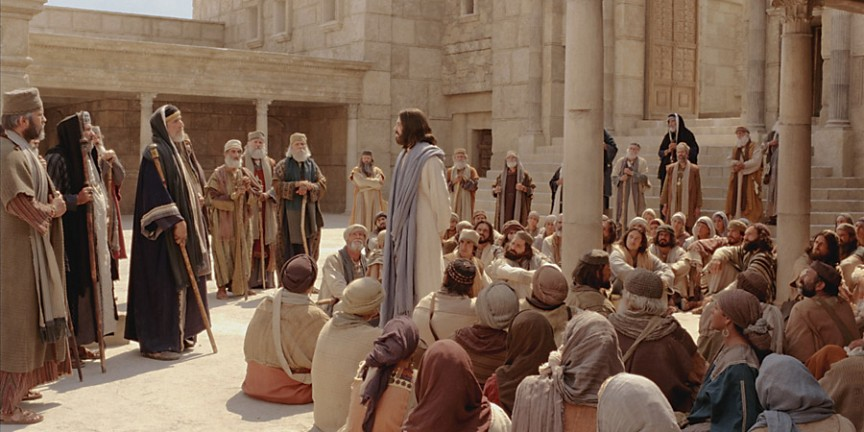
From the lips of Jesus we hear the Parable of the Talents. Jesus tells of a man who is going on a journey. But before leaving, he entrusts his money to three of his servants. To one he gives five talents, to the second two, and to the third, one. He gives to each one according to their ability. After distributing his money to his servants, the man went away. It is worth noting that in the ancient world, a talent was a large amount of money. That the third servant received just one talent does not mean he received a trivial and insignificant amount. While the man was away, the first servant immediately risked the five talents in the open market by trading with it. The second servant does the same. Many of you know the danger of investing your money in the stock market. It is always a risk to do it, but if you don’t, your money won’t grow in value. It is similar to what the first two servants did. In the end, both of them received a rich return on their investments. They doubled their money. As for the third man, out of caution, he buries his talent with the hope of returning it to his master. When the master finally returns, he commends the first and the second servants, and gives them greater responsibilities. For the third man, he rebukes and calls him wicked and lazy.


What is the meaning and purpose of this parable? In the Parable of the Talents, Jesus uses the dynamics of investments, risks and profits as a model for spiritual life. The reason for this is very clear. God exists in gift form. God is the Cheerful Giver. Therefore if you want God’s life in you, you must conform to his own way of being. You must learn how to give if you want to have God. Consider the Parable of the Talents as everything we receive from God— life, breath, being, powers of the mind and will etc. Because they come from God, they are meant to become gifts. If you cling to them just like the third servant, they don’t grow, rather, they wither away. Everything in us came from God and are therefore meant to be in gift form. If you cling to them and use them for your private egotistic needs, they will fade away. The first two servants received more. Why? Because they risked what they have been given. They were willing to give it away, and thereby doubled their wealth. This is the reason why the paradoxical principle we hear at the end of the parable makes a whole lot of sense: “To everyone who has, more will be given and he will grow rich.” If you look at this paradox purely from a worldly and secularistic view, it makes no sense at all. From a worldly standpoint, it is not fair! It is the one who has little or nothing that more should be given, and not the one who already has. Right? But what it means is that the one who truly has the divine life, and knows how to make it a gift, in the end, the original wealth will increase. If you have the divine life, you know it is a gift, and you give it away, that divine life which you have will eventually increase, not diminish. This is the paradox of the law of the gift. 


More to it, Jesus also says, “From the one who has not, even what he has will be taken away.” Again, in our worldly calculation, this is quite unfair. Isn’t it? If someone does not have a lot, the little he has will be taken away. Again, this is a paradox. But what does it mean? If you try to cling to the divine life, you will in a short distant time, lose it. The divine life cannot be clung to because the divine life exists in a gift form. Once you receive it, you give it away and as you give it away, it does not decrease, rather, it increases. But if you cling to it, you will lose it. The problem is that we sinners sometimes get into a bad rhythm. We try to fill ourselves up when in spiritual reality, we should be emptying ourselves out. As sinners, we are a consumerist people, but saints are giving people. Rather than live and move according to the philosophy of “go-getters,” let’s live according to the principle of “go-givers.” This is the general principle that guides the spiritual life. 


With this in mind, let us now apply it to a particular case, to evangelization. That is, the sharing of the faith. Life will grow in the measure that you give it away. Your being will increase in the measure that you give it away. So, your faith will increase in the measure that you share it. In our society today, a lot of people struggle with unbelief or weakened faith. As secularism increases, so also is the attack on our faith from different angles. Attack on religion and on God is today widespread. The fear of God has so disappeared today that people say the most disrespectful thing to God and about God. The spreading of lies, relativism and subjectivism attack our faith too. They make us doubt God’s love, God’s providential care, and God’s involvement in our everyday ordinary life. The propagation of “your view is your truth,” “my view is my truth,” “their view is their truth” and “our view is our God” poses the starkest danger to our faith, they weaken our faith in the reality of God, who creates and sustains the cosmos. If anyone has gone through the loss of a loved one through sickness, or has experienced financial reversal or some sort of a tragedy, it is very tempting to say, “There is no God,” or “God doesn’t care.” In the face of these difficulties and attacks, do not forget the law of the gift. Your faith will get stronger, it will increase in the measure that you give it away. Is this counterintuitive? You betcha! When you don’t have enough, when you lose something of great importance to you, the tendency is to say, “This is not the right time to share my things because I am really short, I have to conserve, to save and to cling to the little I have.” That’s the natural tendency! But in the spiritual order, the right attitude is to do the opposite. It is in the act of sharing that your faith increases and becomes stronger. When it appears that God has disappointed you, do not wait around for your faith in God in return. Start sharing your faith nevertheless, and as you do that, your faith will increase and become more intensified. In the economic context of the parable of the talent, money won’t grow unless it is risked. The conservative strategy is in fact self defeating. Your faith has to be risked, that is, putting it out there. 


What’s the popular attitude today? Privatization of the faith! Make your faith a private matter. Keep it to yourself. Don’t talk about it in the public forum. I tell you, that’s a short road to losing your faith. To some degree, you have to put your faith in danger. You have to put it out there for the haters of faith to mock it, to ridicule it, to question it or to be indifferent to it. Is the sharing of faith easy? Not at all! People would prefer to talk about sports and other things they agree on. From the time of Jesus to the present day, the more you make your faith public, the more you put it at risk. Some people who like you and associate with you, may no longer be comfortable with you. They might call you “weird” and consider your good counsel “religious jibber jabber. The propagation of the faith is always a dangerous venture. Look at Jesus! Look at the Apostles! Look at the saints! The great Pope John Paul II almost lost his life to gunshot because of his fearless preaching in defense of Christ, Christianity, life and against the horrors of communism. Should that make us withdraw from the preaching of the gospel? Not at all! The Christian faith will not grow unless we give it away, that is, unless we share it. So, I ask you to find some concrete ways to share your faith. You can begin it from your home. Find the time, call it “God’s time” to share your faith with your household. Sharing your faith is like risking your money. But Jesus assures that it will pay off eventually. If your faith is of great importance to you, share it with others and it will definitely grow. 


Veni Sancte Spiritus!


Wednesday, November 8, 2023

Homily for the Thirty-Second Sunday in Ordinary Time, Year A


The Wise And Foolish Virgins

Rev. Marcel Divine Emeka Okwara, CSsR

Homily for the Thirty-Second Sunday in Ordinary Time, Year A

Church of St. Bridget of Minneapolis, MN

Sunday, November 12, 2023


Towards the end of his public life, just before the Passion, Jesus narrates the Parable of the Ten Virgins. Speaking to his disciples, Jesus says, “The kingdom of heaven will be like ten virgins who took their lamps and went out to meet the bridegroom.” By the way, this image is borrowed from the practices and customs of Jesus’ time. At that time, weddings were extravagantly celebrated. It was a special event that brought relatives, friends and an entire community together to share in the joys of the bride and the bridegroom. The highlight of the wedding happened at night when the bridegroom, in the company of his guests, leaves his parents’ house, goes over to the bride’s parents’ house, and takes her to their new home. Since this happened at night, at a time when there was no electricity, bridesmaids would hold their oil lambs and accompany them. This is the image that Jesus used in the Parable of the Ten Virgins. In the story, we are told that five of the virgins are foolish, and five are wise. The wise ones have plenty of oil in their lambs. The five foolish ones are not well prepared. After a long wait, the bridesmaid fell asleep. Suddenly the bridegroom arrived and they had to wake up to attend to him. The five wise virgins with sufficient oil were ready to go, but the other five with no oil, could not light their lambs. They are not ready. Who is admitted into the wedding party? The wise ones who are well stocked and ready! Who does not get in? The foolish ones! They are not prepared and not well stocked. 


Like the bridesmaids, we are all waiting. We know the Bridegroom is coming. Jesus is the Bridegroom, and the Church is the Bride. We know the marriage of the Lamb has come and his Bride, the Church must be ready. We know he is coming to consummate this relationship with us. We are waiting for it,  but in joyful hope. But how do we wait? From the Parable of the Ten Virgins we know that some are waiting wisely and others unwisely. Some have their lamps stocked with oil, while others don’t. What does this oil stand for? It stands for that divine life that was given to us in baptism that we are meant to keep alive as we wait. More precisely, it stands for prayer, sacraments, Eucharist, curiosity to know and share our faith. It stands for good works, life of love, the corporal and spiritual works of mercy. Who are the wise virgins, wise bridesmaid and wise waiters? Those who practice these things, who keep the light of faith burning brightly in them. Who are the foolish ones? Those of us who allow that light to dim and die. Although they are in attendance for the wedding or in our own case, they attend Mass, nevertheless, they don’t produce the fruits of Christianity. To keep the light of faith burning brightly, we must pray every day and consciously too. We must be hearers and doers of the word, and users of the sacraments. The sacraments are extraordinary and tangible ways we are meant to encounter Jesus. In the sacrament of the Eucharist, the Lord feeds us; in the sacrament of confession, we sinners are forgiven etc. How often do we use these sacraments? Have we swallowed hook, line and sinker the secularist ideology of “I’m okay and you’re okay?” and “I am beautiful in every single way?” 


Look at the sacrament of confession this way: in our ordinary life, if you commit a crime and you are caught, you would be arrested, tried in court, and jailed. If it is a state crime you committed, the governor of the State can pardon you, and if it is a federal offense, the president can pardon you if you show enough remorse. In a similar fashion, if we commit sin, we need someone else to pronounce us forgiven. Just as you cannot pronounce yourself pardoned if you break state or federal law, so also you cannot pronounce yourself forgiven if you break God’s law. In the Catholic Church, God’s forgiveness is obtained in the sacrament of confession. That the number of Catholics who use this sacrament has fallen is something that continues to baffle me. The Parable of the Ten Virgins is meant to challenge us to stock up on things that matters to God, not to stock up on our sins and iniquities. It is meant to wake us up from spiritual indifference and staleness and sterile Christianity. How strong is your faith? Authentic faith always seeks understanding, so said St. Anselm. If your faith does not seek understanding, how would you be “ready to give an explanation to anyone who asks you for a reason for your hope?” (1 Peter 3:15) Do we love everyday in a concrete way? In the words of Dorothy Day, “Everything a baptized person does every day should be directly or indirectly related to the Corporal and Spiritual Works of Mercy.” Doing these is the way to keep oil stocked in the land. It is the way to prevent the divine life given to us in baptism from fading and dying. The divine life can go out if we don’t attend to it. And if we continuously attend to it, we will be ready when the Bridegroom, Jesus the Lord comes. 


One more point, were the five wise virgins mean and unkind for not sharing their oil with the five foolish virgins? Not at all! In the spiritual level, there are some thing we cannot borrow. If you spend your entire life not cultivating and practicing the corporal and spiritual works of mercy, not living a life of love, not praying, and not using the sacraments continuously etc. you cannot reasonably expect someone at the last minute to give you fruits of their cultivation. It just doesn’t work that way. We can borrow material things from our neighbors, relatives or friends, but cannot possibly borrow relationships with God. No one can borrow good character; we just have to cultivate it.  You cannot make heaven simply by knowing someone in heaven. You have to work out your own salvation with fear and trembling (Philippians 2:12b). 


Wednesday, November 1, 2023

Homily for the Thirty-first Sunday in Ordinary Time, Year A


A Challenge To The Shepherds Of The Church

Rev. Marcel Divine Emeka Okwara, CSsR

Homily for the Thirty-first Sunday in Ordinary Time, Year A

St. Alphonsus Catholic Church, Brooklyn Center, MN

Sunday, November 5, 2023


The words we hear today from the prophet Malachi (1:14b-2:2b, 8-10) about corrupt religious leadership makes me nervous. Through Malachi, God speaks and faults and accuses his own priests of two things: first, “You… have caused many to falter by your instructions,” and, second, “You have made void the covenant,” you made with God and with the people of God. God is accusing ancient Israelite priests for not teaching the whole truth, and for disobeying God’s commandment. Since the Word of God is the same yesterday, today, and forever, the same accusation can be extended to the priests of today. I tell you, the prophet Malachi’s prophetic message troubled me a great deal and it is still troubling me. One promise I made to God on June 30, 2007—the day of my ordination, is to always teach the whole truth, and nothing but the truth of the faith, even when it is not safe to do so and no matter whose interests are affected. I’ve been a priest for 16 years and have served in four different parishes in the USA. Have I always kept this promise? As my community was having our lunch last week (Friday, October 27, 2023), I said to Fr. Gary Lauenstein, “I have mastered the art of saying no to certain food and drink I know are not healthy for me. No matter the pressure from those around me, once I know it is not good for me, I don’t cave in. Now, I am praying to God to give me the same resistance, the same grace and ability to say no to any attitude and behavior I know is not good for my spiritual life. If I can achieve that, I will be a saint. I don’t know why God hasn’t answered me yet.” Looking at me with a smile, Fr. Gary said, “May be, God wants to keep you humble. He wants to prevent you from falling into another sin, the sin of pride.” 


Now, why is it important to teach the whole truth, and nothing but the truth of faith? The objective truth provides the framework for all of us to live a saintly life. Teaching the truth is like showing someone the right path to his or her destination. A priest is a teacher of the faith; he is a custodian of the faith; he is a sign, a messenger and not the message. The Message is Jesus Christ. The role of the priest is to be a sign that points to Jesus. Using the Scripture and the Traditions of the Church, the priest shows us, among many other paths, the right path to Jesus. Jesus himself said, “I am the Way, the Truth and the Life, and no one can come to the Father except through me.” A priest, a bishop or a pope who teaches heresy and gives false instruction does the following: makes a mockery of the faith, sows confusion, makes himself the message, that is, the founder of Christianity, points to the wrong direction, misleads people and sadly jeopardizes their salvation and his as well. This is the reason why St. Paul, in many of his Letters, warns us of false teaching, false teachers and the errors they foster. I believe with my whole heart, soul and mind that the whole Gospel should be preached and taught with clarity and charity. The twelve Jewish disciples of Jesus converted the obstinate Roman Empire by teaching the truth and living holy lives. If priests, bishops and religious do the same today, lots of people will be flocking back to the Church. Imagine what would happen if we preach the whole Gospel of Jesus and live a life of love and not lust. If the shepherds of the Church had been good shepherds and cared for the sheep rather than molesting them, people would believe us and trust us. But this does not let you, the laity off the hook. By your baptism, you are also a priest, a royal priest. You are baptized into Christ and are also called to witness for him. Do you realize that your family is the domestic church? Parents, do you realize that in your domestic church, in your family, you are the pastorcito, little shepherds in Spanish. Are you teaching your children the truth of faith by words and example? If you teach them one thing, and then do the opposite, you are like an unholy priest, a bad pastor. If you are constantly arguing, quarreling, and fighting before their children, and refusing to forgive each other, you are like a bad priest. On your wedding day, you promise fidelity to each other. But if after months and years, you start cheating on your spouse, you are like that priest who promised celibacy and chastity on his ordination day. But after that, betrays the oat. Today, let’s re-commit ourselves to the truth in words and deeds. Truth cannot be a lie, and a lie cannot be a truth. Goodness cannot be bad, and badness cannot be good. Good people can be a little bad and bad people can be a little good, but goodness is not a little bad and badness is not a little good. 


With this in mind, let’s touch on the Gospel. In today’s Gospel (Matthew 23:1-12), Jesus says, “Call no one on earth your father; you have but one Father in heaven.” Call no one on earth ‘father’? Including our biological dads and priests? What’s the Lord talking about? Jesus is using a method of teaching called hyperbole. What is hyperbole? It is a pedagogical tool or method of using exaggerated narratives, description, emotions, images etc in order to make a point. One classic example among the many of Jesus using hyperbole is the Sermon on the Mount in Matthew 5:29:30 where he says, “If your right eye causes you to sin, tear it out and throw it away. It is better for you to lose one of your members than to have your whole body be thrown into Gehenna. And if your right hand causes you to sin, cut it off and throw it away. It is better. for you to lose one of your members than to have your whole body go into Gehenna.” In those words, Jesus is using exaggeration in order to make a point. He is not expecting his disciples to mutilate their bodies to avoid yielding to sin. He is talking about the radical nature of commitment to the Kingdom of God, meaning that we must root out sin wherever we find it. If you are a teacher, a parent, you know that sometimes you use exaggeration to teach your students and kids because sometimes, they get tired, bored and distracted. And one of the ways to help them remember what you are teaching is to exaggerate and use hyperbole as a technique for teaching. Even though I am called ‘father’ I am not the Father, the Source and Paternity of all reality and truth. As people who love honor and titles, we should be careful not to use names and titles that exclusively belong to God. If you are given such a title as a way of honoring you, do not accept it. You are not “Agu n’eche mba.” You are not “Owa na etiri oha.” You are a mere mortal, meaning that one day, you will pass away. No matter how significant you are, do not behave as if you are the alpha and omega. If you are not there, life will move on, life will continue. But if God is not there, all things and all beings will dangerously come to an end. 


Wednesday, October 25, 2023

Homily for the Thirtieth Sunday in Ordinary Time, Year A


The Greatest Commandment 

Rev. Marcel Divine Emeka Okwara, CSsR

Homily for the Thirtieth Sunday in Ordinary Time, Year A

St. Alphonsus Catholic Church, Brooklyn Center, MN

Sunday, October 31, 2023


Developed Israelites of Jesus’ time were required to keep 613 commandments found in the Bible’s first five books. As a result, it was a common practice among the rabbis to inquire from one another what is the greatest commandment, what is the central commandment and the organizing principle of the law. Sometimes to ensure clarity and succinctness, a rabbi was compelled to offer this summary while standing on one foot. In accord with this custom, one of the Pharisees, a scholar of the law approaches Jesus and asks, “Teacher, which commandment in the law is the greatest?” (Matthew 22:36). Although his question was meant to entrap Jesus and use whatever he says against him, Jesus, nevertheless,  gives an honest, clear and extremely illuminating answer: “You shall love the Lord, your God, with all your heart, with all your soul, and with all your mind. This is the greatest and the first commandment. The second is like it: You shall love your neighbor as yourself.” If you are still wondering what Christianity is about, this is it! Mind you, this is not one more philosopher among the many speaking. This is Jesus Christ, the Son of the living God speaking and telling us what the heart of the law is. So, it is incumbent on us and actually obligatory that we listen and obey. More to it, Jesus’ illuminating answer should set the tone for your entire life. I don’t mean your life for today or tomorrow, but your entire life.


But why are the two commandments so tightly linked in Christianity? By the way, it is not controversial to say that the heart of religion is the command to direct one’s energy and life towards God, the Highest Good. It is self-evident that loving God totally, and following his will completely is at the heart of religion. But as dysfunctional people, this is not always obvious. We have to be told again and again. This is one of the reasons why going to church is important. We have to be reminded over and over again to direct the whole of our life and every energy in us following God’s will. Not wealth, not pleasure, not power, not honor, not knowledge, not country, not political party, not family etc. Mind you, all these are good in themselves but God must be the center of our life. Apart from God, nothing else is the highest good. If God is central in your life, if you make Jesus the absolute center of your life, all the things we mentioned and many others will find their rightful place in your life.


As I said earlier, it is not controversial to insist that loving God completely and unreservedly is at the heart of religion. But why does Jesus immediately add the second commandment? Don’t forget that the Pharisee, the scholar of the law, only asked for one commandment: “Teacher, what commandment (not commandments) in the law is the greatest?” He asked for just one, but Jesus added a second one. Why? Because God loves everything and everyone that he has made. Everything visible and invisible would not have existed unless God loves them into being. Therefore, if you love God with all your soul, heart and mind, you will unquestionably and certainly love what God loves. This is precisely why the two commandments are interlaced. As I was growing up in my family, I got to know that there were certain things my mother loved not so much because they were her thing; she loved them because my father, whom she loved, loved those things. As we can see, the requirement of love is far more than simple affection or warm sentiment. Our love for our neighbor must express itself in concrete terms. So, who in your life, right now is in most need of love? Who is the poorest right now in your life? Think of someone that is irritating to you. Think of someone that is distasteful to you. Think of someone that you don’t really like. Think of someone you make an effort to avoid. Think of someone you may not automatically seek out. You may have plenty of reasons why you don’t like them. But remember this: that person has been loved into existence by God. What matters is not the person’s worth to you, but that person’s worth to God. You might consider the person ‘worthless,” “useless” and “not needed.” But the stubborn fact here is that that person has value and worth to God. So, love that person because God loves them and we love God.


You love the Lord with all your mind, heart and soul. Right? If you really do, you won’t forget the poor, the marginalized, the needy and the forgotten. You won’t forget those on the margins of the society mentioned in our first reading (Exodus 22:20-26) for today: “You shall not molest or oppress an alien, for you were once aliens yourselves in the land of Egypt. You shall not wrong any widow or orphan. If you lend money to one of your poor neighbors among my people, you shall not act like an extortioner toward him by demanding interest from him.” God loves all things and all people. They won’t come into existence unless he loved them into being. But littered in so many pages of the Bible is God’s focused attention on the “poorest of the poor.” God loves  with a special love, those who are most in need of love. And so should we if we love God with everything we have got. For the past 55 years, the Catholic Church speaks about the preferential option for the poor. Now, don’t get it twisted. The Church loves everybody because God loves everybody and the Church loves what God loves. However, the Church loves with a special love, those who are poor in every sense of that term. The command now is to love them specially.


Veni Sancte Spiritus!  

Wednesday, October 18, 2023

Homily for the Twenty-Ninth Sunday in Ordinary Time, Year A


The Puzzle Of Caesar And The Coin

Rev. Marcel Emeka Divine Okwara, CSsR

Homily for the Twenty-Ninth Sunday in Ordinary Time, Year A

St. Alphonsus Catholic Church, Brooklyn Center, MN

Sunday, October 22, 2023


We are not looking at a parable of Jesus, rather a riddle of Jesus. Our Gospel narrative today can rightly be called the riddle of Caesar and the coin. After the Parable of the Wedding Feast, which we read last weekend, Matthew says that the Pharisees secretly met, and the result of their meeting is to send their disciples to Jesus, along with the Herodians. What for? To entrap Jesus in speech. To set him up with a question that has serious political and theological consequences. At the time, Israel was under Roman rule; and the Herodians were totally loyal to Rome. The Pharisees, on the other hand, held that God alone was their King and Lord and viewed the payment of taxes to Rome as acts of surrender to the despised Roman emperor, Tiberius Caesar, a foreigner and a pagan at that. This hot issue was worsened by the fact that Rome’s tax burden on the Jewish people was extremely heavy. So, the Herodians’ loyalty to Rome and the Pharisees’ hatred for Rome and its emperor, Tiberius Caesar, made the Pharisees and the Herodians mortal enemies. But on this occasion, we see two groups of bitter rivals coming together. They set aside their hostilities in order to confront their common interest— which is, setting Jesus up and in the process getting rid of him. They tried to get Jesus to give a yes or a no answer to the question of whether it is lawful to pay taxes to Caesar or not. If for instance, Jesus says, yes, it is lawful to pay taxes to Caesar, he will anger the Jewish crowds. He will be accused of being a Roman sympathizer. In the first century AD, there were Jews famously called the zealots who vehemently opposed the Roman occupation of Jerusalem and to the land of Israel. They saw the Romans as pagan overlords who had no right to be in their land and they also saw Jewish tax collectors as the equivalent of Gentile sinners in part because they were colluding with the occupying forces of the Roman Empire. On the other hand, if Jesus says no, it is unlawful to pay taxes to Caesar, he will anger Rome and will be accused of sedition or of rebellion against the Roman government.


But as is always the case in the Gospels, you can’t just trap Jesus. You are always going to end up being trapped yourself. Responding to the Pharisees Jesus says, “Show me the coin that pays the census tax.” He is referring to a particular kind of coin called the Denarius, stamped with the face of the Emperor and with an inscription that says, “Caesar Augustus Tiberius, Son of the divine Augustus.” Some of these coins produced by the Emperor, Caesar Tiberius, from the time of Jesus’ life, that is around AD 14 to AD 37 are still available today. People still sell them for big bucks online. Think about this again. When Jesus was handed the coin, it not only had the graven image of the Roman Emperor Tiberius Caesar, it also had the inscription that called the emperor “the son of God.” His father, Augustus was deified and regarded as divine by the Romans. In the 1st century AD, the two previous emperors Julius Caesar and Augustus Caesar were both divinized. They were both elevated to the status of gods by the Roman Empire. If you read the book titled “Lives of the Caesars” by Suetonius you will find this. By the way, there were 12 Caesars. When the author, Suetonius got to Julius Caesar and to Augustus, he called them the life of the deified Julius and the deified Augustus. In essence, the coin that they handed to Jesus had on it the image of Caesar who was claiming to be the son of God. What Jesus does now is really ingenious. He takes the coin with all that is written on it and then asks, “Whose image is this and whose inscription?” As they answered “Caesar’s,” Jesus drops what has become one of his famous one-liners, “Then give to Caesars what belongs to Caesar and to God what belongs to God.” In a very shrewd way, Jesus escapes from the trap and endorses payment of tax to Caesar. The money can go to Caesar, it can be paid lawfully to Caesar. Up and down the centuries, this passage has been used to enjoin and teach Christians to be dutiful to the state, to be responsible citizens, and to give to the state what is due to the state, which includes paying taxes and being contributing members of the society. That is the part of what Jesus is saying but not the heart of what he is getting at. Yes, he is telling the Pharisees to give their money to Caesar but then to give their life, their very self to God. Upon hearing the Lord, what was their reaction? The final verse of this Gospel passage, which the Lectionary leaves out but which is very important says, “When they heard this they were amazed, and leaving him they went away” (Matthew 22:22). In other words, they marveled at the truth of what Jesus said and the fact that they couldn’t catch him in their trap. His answer was simply too brilliant to refute. 


Now, what belongs to Caesar? The taxes he claims by law. The laws that he enacts. The demands of the state as long as they don’t require us to transgress God’s command to love. What belongs to God? Everything! Your life! Your political life! Your social life! Your religious life! Your professional life! Your business life! Your family life! Your entertainment life! Your civic life! Your love life! Your married life! Your academic life! Everything! All of it! We should not read Jesus’ one-liner as a demarcation of political life and religious life. We should not interpret it as though some aspects of our life belong to us or to Caesar or to friends or to family and not to God. Sometimes I hear some Christians utter heretical comments like, “Please, please, don’t bring God into this matter,” “Please, keep your religion to yourself, I don’t want to hear it,” “Uka di n’obi” that is, “religion or spirituality is a personal thing.” Now, when someone, a Christian echoes any of these expressions, what’s usually the goal? To keep God at bay. To dethrone the way of God, which is love and to allow division, tyranny, unforgiveness, and darkness to reign. Whenever an attempt is being made to clearly demarcate ordinary life and religious life, it is always to enthrone the devil’s way of divide, divide and divide and to spread darkness everywhere. Giving God what belongs to God means giving God everything about you. It is everything you do here in the church, at home, at work place, in secret and public. The greatest gift of offering you can give to God is not money, but your life, your whole being and everything associated with you.


Veni Sancte Spiritus! 


Wednesday, October 11, 2023

Homily for the Twenty-Eighth Sunday in Ordinary Time, Year A


God Invites And Invites And Invites 

Rev. Marcel Divine Emeka Okwara, CSsR

Homily for the Twenty-Eighth Sunday in Ordinary Time, Year A

St. Alphonsus Catholic Church, Brooklyn Center, MN

Sunday, October 15, 2023


What can we compare the kingdom of heaven like? Jesus says it is like a king who gave a wedding feast for his son. On the actual day of the feast, the king sent his servants to summon the invited guests. Unfortunately, they refused to honor the invitation. But rather than give up, the king sent other servants with more enticing news to the guests: “Behold, I have prepared my banquet, my calves and fattened cattle are killed, and everything is ready; come to the feast.” But despite the king’s best effort, some ignored his invitation and went away to their different enterprises. Others manhandled his servants and had them killed. Upon hearing what had happened, the king responded with extraordinary anger. He killed them and burned down their city. Thereafter, the king instructed his servants to go to the streets and invite whomever they found to the feast. The banquet hall is now filled up. As the king was making his way into the banquet hall, he noticed a man who was not properly dressed in a wedding garment and ordered that he be thrown out of the hall. 


What’s the point of this parable called the parable of the wedding feast? In this story, Jesus is using a very exaggerated narrative, exaggerated descriptions, exaggerated fictional characters and emotions to wake us up to some indispensable spiritual truth. So, the way the king in this story behaved is not the way God behaves. If that’s how God behaves, then new atheists are right to say that the biblical God is a psychotic tyrant. But we know that our God is patient, kind and merciful. Like other parables, that is, fictional and invented stories, this one is also meant to teach us a deep spiritual truth. What spiritual truth? Jesus the Mashiach, the very incarnation of the Yahweh, wants to marry the human race. He wants to unite the human race to God. And God, the Lord of host, is organizing a great banquet, a wedding banquet for his Son. The food offered in this wedding feast is the best breakfast, the best lunch, and the best dinner. God invites his special people through the prophets and teachers in Israel. Sadly, they were ignored, resisted, opposed and killed. Think of the many prophets and emissaries of God who have been murdered. This is why the king’s reaction is excessive. What we are supposed to see in this story is our consistent refusal to honor God’s invitation and not the king’s extreme response. It is utterly strange to refuse the invitation of our Creator. This story is meant to grab us by the shoulders and shake us up to the reality of the kind of invitation we have been given and from whom it is coming from. The invitation from God is the best possible invitation and it makes absolutely no sense to refuse it. 


As the human race consistently refuses God’s invitation, how does God respond? How do we read God’s anger in the Bible? The Bible, especially the Old Testament is filled with lots of examples of God raging in anger. Yet again do not read it in a strict and actual sense. God does not have emotions the way we do. God does not fall in and out of an emotional state. God is not erratic and unstable. God is love! The eternal God is unchangeable. So, do not say, “God is now in a good mood” or “Now he is in a bad mood.” Sometimes I hear people say, “God is angry with me because of…” If you believe that, it means you have power over God. It means  you can control God. But God does not fall in and out of state. How do we now read his anger? Read his anger as expressed throughout the Bible including this parable as a metaphor for God’s desire to set things right. The destruction of the city as we see in this parable indicates the spiritual destruction that follows from refusing the divine invitation. I tell you, there is no greater misfortune in life quite like refusing to listen to God’s invitation. If people are asked the simple question, “What is the greatest calamity in life?” The majority including some of you listening to me now might say things like abject poverty, homelessness, substance abuse, injustice, genocide, etc. And don’t get me wrong, all those are bad. But from a biblical standpoint, the greatest misfortune is saying no to God. It is rejecting God’s invitation. This invitation from the King to the wedding feast of his Son is being sent out through the Church, through the Sacraments, through the preaching, through the witnessing of holy people, through our religious icons etc. But how many people are receiving it? How many people are willing to attend it? 


Everyone is welcome to the feast. God is lavishing his grace upon the whole human race. God is relentless. Do we refuse? Sometimes! But when we refuse, God does not tire or give up, he invites more and more and more. As the party commences, the king comes to join the party. Then he finds a man without a proper wedding dress. He confronts him and eventually throws him out of the banquet. What’s going on here? Is the King suddenly in a bad mood? Has his dysfunctional side reasserted itself? From our human justice, this is unfair. How do we read this? Our invitation and admission into God’s household is grace. God invites and we comply. God gives grace and we cooperate. But then we must live according to the rules of God’s house. We must dress appropriately so as to live and act in divine house. What does the wedding garment stand for? What does the man lack in the wedding feast? In Isaiah 61:10, the prophet speaks about being clothed “with the garment of salvation” and being covered “with the robe righteousness.” If you take this image of Isaiah and move it to the New Testament, the man without the wedding garment seems to be lacking the righteousness that fits the Kingdom of God. He does not have a developed moral and spiritual life. And without it, we are not better than those who refused the invitation from the very beginning. In this parable, Jesus wants to wake us up from any spiritual slumber. 

Thursday, October 5, 2023

Homily for the Twenty-Seventh Sunday in Ordinary Time, Year A


Diligent Builder And His Unproductive Vineyard

Rev. Marcel Divine Emeka Okwara, CSsR

Homily for the Twenty-Seventh Sunday in Ordinary Time, Year A

St. Alphonsus Catholic Church, Brooklyn Center, MN

Sunday, October 8, 2023


Today’s first reading taken from prophet Isaiah (5:1-7) begins in an unusual way. Instead of “Thus says the Lord,” Isaiah begins with “Let me now sing of my friend.” Isaiah does not shout or scream or scold. He does not mumble or meander. Isaiah sings. He tells the story of his friend. His friend has planted a vineyard on a rich and productive hillside. After that, he tills the land thoroughly. He clears the land of stones. If you have done this kind of work of clearing the land of stones, you know how difficult and back-breaking and time consuming it can be. After that, Isaiah’s friend plants “the choicest vines,” that is, the very best vines he can find. After that, he built a watchtower and hewed out a wine press. What’s the watchtower for? It is used to guard this precious vineyard against vicious invaders. As for the wine press, it is built in anticipation of a great harvest of grapes. Finally we are told that he built a wall around the vineyard to further protect it from marauders and animals etc. 


Who is Isaiah’s friend? Who is the owner of the vineyard? The Lord God of Israel! Who is the vineyard? The people of Israel! What’s the point of the love song? Prophet Isaiah is showing us the extent the God of Israel has gone to build his people. The cultivation of the land, the clearing of the land, the removal of stones, the building of a watchtower and a protective wall etc speak about a thousand different ways that the God of Israel has cultivated and formed his people. It is about all the ways the Lord has shared his heart with Israel. Think about the great act of liberation by which God brought out Israel from the slavery land in Egypt. This is all the ways that God has prepared this beautiful vineyard. But despite all the great effort made, God is disappointed and frustrated. Why? At harvest time, when he comes looking for crop of grapes, what he found “was wild grapes. Despite all his efforts, what he found at harvest time was stinking grapes. Up and down the prophetic literature, we hear that God gave his whole heart to his people, but his people has not responded in kind. They know the law, they received the covenant, they have the temple, they have the prophets, they have the benefit of escaping from the slavery land, Egypt, yet, they have not responded to God’s overtures. 


Now, don’t think that this story, Isaiah’s love song, is only about ancient Israel. It is also about us. St. Paul refers to the Church as the new Israel. We are the new Israel. We are now the chosen race. From the lips of John we hear, “He came to his own people, but his own people did not accept him. But to those who did accept him he gave power to become children of God…” (John 1:11-12). In Catholic terms, everything is grace. God lavishes his grace and love upon us, and we are meant to cooperate with that grace. God’s grace does not guarantee that the harvest will be great and fruitful unless we cooperate, unless we respond to it. Look at our own lives. Hasn’t God lavished his grace upon us? Of course he has. Like ancient Israel, God has also done for us a great act of liberation from the slavery land. God gives us his Son, Jesus Christ. His victory on the cross is our victory too. He wins for us. He liberates us from the shackle of the Devil. He even says, “Whoever has been set free by the Son of Man is free indeed” (John 8:36). Add to it, he gives us the sacraments, the Church, the Bible, the communion of the saints etc. We also have the angels, our Guardian Angels who are protecting and guiding us to the kingdom of God. These are the different ways that God is cultivating us, his children. Think of the sacraments again, especially the Mass, the Eucharist. How many of our brothers and sisters in faith are staying away from it today? A lot! The attitude today is, “I don’t need to go to church to pray to God.” Think about the sacrament of confession. How many churchgoing Catholics are staying away from it? A lot! The attitude today is, “I can confess my sins in my house and that’s enough.” Think about many Catholics who are cohabiting and having children without the sacrament of marriage. But they will bring their children to church for baptism. Why? Because they believe that the sacrament of baptism is good for their kids. Strangely, such couples dither when you encourage them to sacramentalize their marriage. They just don’t get it that in spiritual life, what is good for the goose is also good for the gander. 


Truth be told! God has cultivated his vineyard and will continue to cultivate it till the end of the world. And he is cultivating it through various means and ways. But will the people of the world respond? Will the attitude of “I am okay, and you are okay” allow us to yield to God’s grace? Will the secular philosophy of  self-affirmation “I am beautiful in every single way” allow us to cooperate with God’s grace? When God returns at harvest time, will he find good and sweet grapes or wild and stinking grapes? The stubborn refusal to surrender to grace, the prideful attitude of ignoring the sacraments, the delusional mindset of believing, relying and depending on oneself is the reason why Jesus, in our Gospel for today (Matthew 21:33-43) says to the chief priests and the elders of the people, “I say to you, the kingdom of God will be taken away from you and given to a people that will produce its fruit.” I tell you, the first most important fruit is humility. Humility is from the Latin “humus,” (soil)“humilitas,” that is, close to the ground, the earth. A humble person is so close to the ground, close to reality. In the spiritual order, reality is finally knowing the stubborn fact— that no one can pay his or her own ransom. That we all need God, we need the Church, we need the sacraments and all the various ways and means that God is sharing his heart with us. No matter how great, how wealthy, how talented, smart, beautiful, wonderful and amazing we may be, we ultimately need God to be saved. 


God bless you!

Homily on the Solemnity of the Most Holy Body and Blood of Christ

Why Do We Need The Eucharist Rev. Marcel Divine Emeka Okwara, CSsR Homily on the Solemnity of the Most Holy Body and Blood of Christ, Year A...