Monday, December 22, 2025

Homily for Christmas Day


In Jesus, God Became A Baby

Rev. Marcel Divine Emeka Okwara, CSsR

Homily for Christmas Day

Church of St. Bridget of Minneapolis, MN

Thursday, December 25, 2025


I believe there is something undeniably captivating, attractive, and charming about a baby. If you bring a baby into a room full of people, everything changes. For a moment, the baby’s arrival interrupts the conversation. If someone in the room is talking too much and those around are trying to stop them, the baby in the room will do the magic. If someone injects a divisive, controversial topic into the crowd, and the rest of the people are looking for a way to change the conversation, the introduction of the baby will do it. A baby in the room will brighten and soften faces, elicit smiles, and cause people to reach out instinctively to the baby. Even the most hardened or distracted person finds himself drawn in. Babies have a quiet power: they bring peace, awaken tenderness, and draw people together simply by being present. A little child brings out the best in us and calls forth love from us. No matter how busy a mom or a dad is in the house, the moment they hear a distressing cry from their baby, they will abandon everything and run toward the baby. And this goes for every adult. I have brothers and sisters with young children. Whenever I am in Nigeria with them and realize they are playing outside, my protective instinct kicks in. I find myself drawn to them as I watch them, wanting to ensure they do not injure themselves in the course of running around and playing.


I am sure those who gathered around the manger when the Baby Jesus was born did what we still do today: they were drawn to the baby; they smiled with affection, gently touched him, and spoke about how cute he looked. And without realizing it, they were drawn closer not only to the child but to one another. Why am I talking about a baby? The central message of Christmas, and of Christianity, is that God became a baby. The Creator of the universe, the source of all that exists, the reason there is something rather than nothing, the omniscient and omnipotent God, became an infant too weak even to raise his head. 


This divine child is placed on our laps on this Christmas Day. Imagine this baby being brought into your family this Christmas, and you are able to look into his face and smile at him. This is what Christmas is about. But why would God do this? In our first reading (Hebrews 1:1-6), we hear, “In times past, God spoke in partial and various ways to our ancestors through the prophets; in these last days, he has spoken to us through the Son…” The human quest for God is found in other religions and philosophies, particularly in the Old Testament. A good example is the Psalmist praying, “As a deer yearns for running streams, so my soul is longing for you, my God.” It is part of our spiritual experience to long for God. But biblical religion is not primarily about our quest for God. It is about God’s relentless quest for us. Don’t forget this fact: God does not need anything from the world. He created the world out of sheer love. God does not need you or me. In Himself, God is perfect. But God wants to share his life with us. This is Christianity! This is why God became a baby. 


“In times past, God spoke in partial and various ways to our ancestors through the prophets…” God called Abraham, Isaac, Jacob, Joseph, Moses, and Aaron. He called Samuel, David, and Solomon. He called Isaiah, Jeremiah, Ezekiel, Daniel, Amos, Micah, and other prophets. He called Miriam, Deborah, and Ruth. He called Elizabeth, Mary, and Joseph. Why was God calling all these people? God wanted to use them to form a people after his own heart. God also gave laws and commandments. I know this is the spot that gets people all riled up. They say religion is bad because it hinders human freedom through laws. They say God is making arbitrary and oppressive demands upon us. That is not true. God’s commandments are meant to lift us up, not complicate life. There is nothing in the commandments of God that is oppressive, repressive, or suppressive. The law of God is meant to shape us toward happiness and joy. A good coach will undoubtedly equip his players well, including the rules of the game. God also gave us prophets to arouse our interest in the divine life.


Were the prophets sometimes harsh? You bet! They were calling people back to obey the Torah. God’s people were stubborn, so the prophets used rebuking language. When I lived with my grandmother, I used to accuse her of talking too much. But she would always tell me, “Wherever there is an elder who is talking too much, there is a child who is disobeying too much.” And she was right. She would give me chores, but I would prefer to play soccer first. God gave his people the Torah not because God is difficult, but because God is passionate about setting things right. All you parents listening to me, have you ever raised your voice at your children? If you haven’t, it is either that you gave birth to angels or you are failing in your sacred duty as parents. If your child walks on the wrong path, you raise your voice and speak out. So, God, through the prophets, raises his voice. That is not God being abusive. It is God running toward us. He wants to stop a trainwreck before it happens. 


Now, despite all these divine efforts, we tend not to respond. Despite choosing the patriarchs, giving us laws, sending prophets, and coming after us, we tended to run in the opposite direction. We tended to disobey and break the commandments and the covenants. We tended to stone and kill the prophets. God tried multiple times to reach us, but we ran away. But in the fullness of time, God spoke to us through the Son, and the Son entered the world as a baby. Why? Because it is more challenging to resist a baby. Who can resist a baby? This baby is God. This baby is placed on your lap today. As we look at the baby's face, we see the very face of God. God tried patriarchs and kings. God gave us laws, rituals, and commandments. And they are all good. But at the end of the day, God decided to come as a baby, because babies are irresistible. As you celebrate Christmas, remember it is all about Him. It is all about Jesus Christ. Christmas with Christ is a waste of time and resources. If you look at our Christmas manger, you will notice that all the animals and human figures are looking in the same direction. They are looking at the baby, signifying that the season of Christmas is about Jesus Christ. It is all about Him.  


Merry Christmas! 

Tuesday, December 16, 2025

Homily for the Fourth Sunday of Advent, Year A


Why Is Jesus Called Immanuel?

Rev. Marcel Divine Emeka Okwara, CSsR

Homily for the Fourth Sunday of Advent, Year A

Church of St. Bridget of Minneapolis, MN

Sunday, December 21, 2025


One of the most beautiful names given to Jesus in Sacred Scripture is Immanuel. It appears in the Bible three times, twice in the Old Testament book of Isaiah and once in the Gospel of Matthew. In the Book of Isaiah, which is our first reading for today (Isaiah 7:10-14), we hear, “Therefore the Lord himself will give you this sign: the virgin shall conceive, and bear a son, and shall name him Emmanuel.” Seven hundred years after Isaiah's prophecy, a virgin from Nazareth named Mary was engaged to Joseph. Before they were married, an angel visited Joseph to confirm that Mary had conceived a child through the Holy Spirit (Matthew 1:20-21). When the child was born, they named Him Jesus. The birth of this child, Matthew’s Gospel says, is the fulfillment of what God said through the prophet Isaiah: “Behold, the virgin shall conceive and bear a son, and they shall name him Emmanuel, which means “God is with us” (Matthew 1:23). Now, this title is not merely a poetic or comforting phrase; it is the very heart of our faith. But why is Jesus called Emmanuel? Asking that question is really asking, “Who is our God, and how does He relate to us?”


First, Jesus is called Immanuel because He is God who dwells among us in His incarnation. Jesus is God in the flesh. In Him, God truly enters human history. In the Old Testament, God was often seen and experienced as distant—only appearing in fire, cloud, or thunder. But in Jesus, God comes close. He makes His home among us so that He can reveal God to us. He is conceived in the womb of the Virgin Mary, born in a manger, and raised in an ordinary family. In Jesus, God speaks to us with a human voice as He did with Adam and Eve in the Garden of Eden. He does not shout to us from heaven. He talks like us. He walks our roads, knows our joys and sorrows, and shares fully in our human condition—except for sin. 


Second, Jesus is Immanuel because God is with us in our suffering. The world often asks, “Where is God when we are in pain?” The answer in Christianity is not just a theory but a person. God is with us on the cross. Jesus understands betrayal, rejection, poverty, tears, and death. When we suffer, we are never alone. The God who is with us is a God who has suffered for us. Immanuel means that no hospital room, no graveside, no moment of despair is ever godless. Jesus was not just a sign of God with us. He was not just God’s representative. Jesus is God with us in Person. 


Third, Jesus is Immanuel because God remains with us always. Before ascending into heaven, Jesus promises, “I am with you always, until the end of the age” (Mt 28:20). He fulfills this promise in a powerful way through the Eucharist. In the Blessed Sacrament, Immanuel is not just a memory of the past but a living presence among us. Every time we come to Mass, God is with us—feeding us, strengthening us, and dwelling within us.


What is the implication of God being with us? We are to become signs of God’s presence to others. We are now his visible and physical hands in the world. If God is with us, then He wants to be with others through us. When we forgive, when we show compassion, when we stand with the lonely and the forgotten, we make Immanuel visible in the world. The name Immanuel is not only something we believe; it is something we are called to live.


Sisters and brothers, Jesus is called Immanuel because in Him God is not far away, not indifferent, not absent. He is with us in our joys and struggles, in our sin and redemption, in our lives, and even in our death. Although Joseph and Mary did not name Jesus Immanuel, his nature makes Him truly Immanuel. 


As we prepare to celebrate His historic entrance into human history, may we trust deeply in this truth: God is with us—always. Amen.


God bless you!

Wednesday, December 10, 2025

Homily for the Third Sunday of Advent, Year A


Faith In The Face Of Doubt: A Lesson From John The Baptist

Rev. Marcel Divine Emeka Okwara, CSsR

Homily for the Third Sunday of Advent, Year A

Church of St. Bridget of Minneapolis, MN

Sunday, December 14, 2025


Shortly after his emergence on the public scene, John the Baptist pointed to Jesus as “the Lamb of God, who takes away the sin of the world” (John 1:29). He referred to him as “the Son of God” (John 1:34) and as “one mightier than I” (Matthew 3:11). With these words, John seemed pretty clear about who Jesus is. However, in today's Gospel, John appears confused about Jesus' true identity. What changed? John is in prison at this time. Herod Antipas arrested him for opposing his marriage to his brother’s wife, Herodias. His public ministry has ended, and he is within days or weeks of his execution. Evidently, John is receiving reports of Jesus’ ministry from prison. We can speculate that perhaps Jesus wasn’t exactly what John expected him to be. While John was a preacher of fire and brimstone, Jesus had a different style and approach. So, John sends his disciples to Jesus with a perplexing question: “Are you the one who is to come or should we look for another?” What is the Lord’s response? “Go and tell John what you hear and see: the blind regain their sight, the lame walk, lepers are cleansed, the deaf hear, the dead are raised, and the poor have the good news proclaimed to them” (Matthew 11:4-5). 


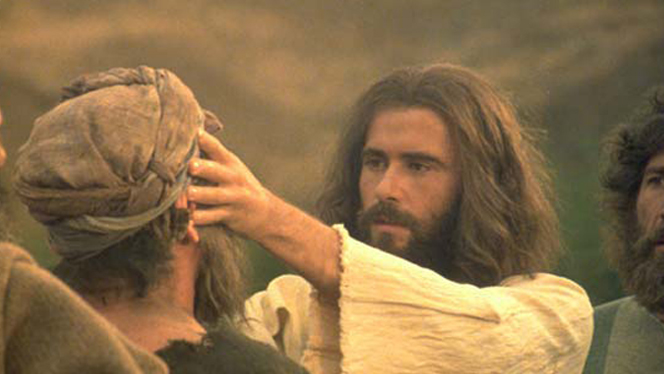
What is striking is that the Lord’s response to John the Baptist is concrete, not just abstract ideas. Jesus’ reply to John’s question isn’t based on words alone but on actions—miraculous deeds. You can argue with words, but you can’t argue with actions. You can debate theology, but miracles speak for themselves. Jesus himself is the ultimate miracle. Something truly significant is happening in Jesus of Nazareth. There is a clear difference between Jesus and mere Gurus or spiritual teachers. Yes, Jesus is also a spiritual teacher, but he is unlike anyone else. No one has ever been like him. Something profound is taking place in Jesus. And what is happening directly fulfills what Prophet Isaiah predicted when the Messiah arrives—bringing healing and restoring unity within God’s creation. Sadly, for centuries, many people, including some theologians, have tried to deny the miracles of Jesus. They claimed the stories of Jesus’ miracles in the Gospels are just made-up stories. They argued for removing all Gospel passages that describe supernatural events in Jesus’ life and ministry. But any attempt to remove those will result in only a few pages of the Gospel remaining. Why? Because the Gospels consistently testify to Jesus as a healer and miracle-worker. Jesus was an exceptional preacher with a unique approach. Beyond his powerful sermons, he also performed miracles. In every town he visited, countless miracles accompanied his teachings. It’s fair to say that his miracles and healings made his teachings more credible. That’s why people flocked to listen to him. They saw him as a remarkable figure. 


Today’s Gospel (Matthew 11:2-11) presents us with what seems to be a scandal and a puzzle. The scandal is that John the Baptist, whom Jesus Himself called the greatest of the prophets, now appears to have doubts about Jesus, and the puzzle is why. The message John sent his disciples to Jesus, “Are you the one who is to come, or should we look for another?” seems to express some doubts about whether Jesus is truly the Messiah. Yet John’s entire life was devoted to pointing to Jesus as the Messiah and preparing His way. One lesson for us all is that even the best of us can have doubts, especially in difficult places like prison. Honest doubts are not sins. If you have doubts, don’t be dishonest; don't pretend you don’t. Think them through. Talk about them. Talk to God about them in prayer. Talk to a priest. Talk to both those with doubts and those without. Doubts can be the ants in the pants that keep your faith alive and moving forward. During my studies at the Seminary, I had serious doubts about God’s omnipotence and omnibenevolence. I wrestled with it, discussed it with my spiritual director, and resolved it. 


In this Advent season, as Christmas approaches, I ask you: what are your doubts? Which parts of our faith are still confusing to you? What have you done to address them? As I mentioned before, don’t pretend you have none. John the Baptist, the one whom Jesus calls the greatest of those born of women, had his own doubts. But what he did is what everyone is invited to do: seek answers. He went directly to Jesus through messengers. Let your doubts serve as the catalyst for spiritual growth and maturity. 


May God bless you! And grant you His peace!

Wednesday, December 3, 2025

Homily for the Second Sunday of Advent, Year A


The Seven Gifts Of The Holy Spirit For Advent Hope

Rev. Marcel Divine Emeka Okwara, CSsR

Homily for the Second Sunday of Advent, Year A

St. Alphonsus Catholic Church, Brooklyn Center, MN

Sunday, December 7, 2025


In our first reading today (Isaiah 11:1-10), we come to one of Isaiah’s most prominent descriptions of the Messiah: “On that day, a shoot shall sprout from the stump of Jesse, and from his roots a bud shall blossom.” Who is Jesse? He is the father of King David. Isaiah is essentially announcing that the Messiah will come from the lineage of David. 


What will this Messiah look like? Isaiah declares, “The spirit of the Lord shall rest upon him: a spirit of wisdom and of understanding, a spirit of counsel and of strength, a spirit of knowledge and of the fear of the Lord.” In those words, Isaiah describes what we often call “The Seven Gifts of the Holy Spirit.” He is essentially saying that when the Messiah comes, he will be so filled with the Spirit of God that he will exhibit the seven manifestations of the Divine Spirit. Why is this so important to us, you might ask? First, it shows us what Jesus is like and what he possesses. Second, it reminds us again that those of us who are baptized and grafted to him have also been gifted with these seven gifts of the Holy Spirit. Therefore, part of our Advent hope is to reflect on these seven gifts and see if they are active in our lives. And by the way, you can find them throughout our tradition. The great St. Augustine wrote extensively about them. The angelic scholar, St. Thomas Aquinas, wrote about them. These gifts are wisdom, understanding, knowledge, counsel, fortitude, piety, and the fear of the Lord. 


The first gift of the Holy Spirit is wisdom, sophia in Greek; sapientia in Latin. According to Aquinas, wisdom is the view from the hilltop—meaning a vision that sees things from the perspective of the highest cause, God. While serving as pastor of St. Gerard Majella Church in Baton Rouge, Louisiana, we discovered that the church steeple was leaking. When the company arrived this morning to fix the issue, the crane operator asked if I wanted to see the problem area in the steeple. I agreed. I don’t have acrophobia (fear of heights). The moment the crane lifted us to the tall steeple, and I looked around, I nearly saw the entire neighborhood in an instant. If you are a wise Christian, you will see the world not from a narrow, self-focused perspective, but from God’s perspective. When something good and worth celebrating happens to you, you’re not carried away by it but take a moment to ask the great question: How does this impressive thing fit into God’s plan? You have finally found your dream job; you have married your better half; you’ve made the money, and so on. But how do all these fit into God’s plan for you? And when you’re facing tough times, perhaps experiencing Job-like suffering, instead of falling into depression or despair, you ask yourself the great question: How does this misfortune fit into God’s design? These are some of the questions a wise Christian asks. 


The gifts of understanding and knowledge are often connected. St. Augustine said that knowledge and understanding help us appreciate the holy things of God. Where do we spend most of our intellectual energy? We mostly try to understand politics, mathematics, science, sports, etc. But the gifts of knowledge and understanding lead our minds toward the deep mysteries of God, such as the Trinity, the Incarnation, the Real Presence of Christ in the Eucharist, the Sacraments, eschatological topics, sin, grace, and the question of “What must I do to inherit eternal life?” With these gifts of the Holy Spirit, we catch a glimpse of them; we pray, desire, and meditate on the things of God. 


The next gift of the Holy Spirit is counsel. This gift helps us navigate the world. It guides us not only in making decisions in business, politics, and daily life but also in choosing the kind of person we want to be. Throughout your day, as you care for your family, go to work, attend church, or do other activities, take a moment to ask yourself, “What kind of person am I?” “What is my deepest love?” “What is the most important value in my life?” Making good choices about the kind of spiritual person you aspire to become is supported by the gift of counsel. Recently, while walking in the hallway for exercise, I saw a beautiful photo of St. Carlo Acutis. I encourage every young person in this church to read a book about him. Knights of Columbus, if you haven't bought any Christmas gifts for the parish, please consider purchasing a book about St. Carlo Acutis. He was a teenager with a genuine sense of sainthood and made morally and spiritually good choices to become one. The next gift is fortitude. Isaiah calls it strength. This gift enables us to do good even in the face of strong opposition. We understand that doing good isn’t always easy. We encounter many temptations—both internal and external—that lead us away from doing what is right. I know what I’m supposed to do, but I sometimes struggle to do it. I know forgiving someone is good, but I hesitate because I fear being seen as weak. Fortitude helps us to declare, “I will become the person God wants me to be.” In the Garden of Gethsemane, Jesus was deeply tempted to refuse the cross. But because the Spirit of strength was upon him, he chose to die to save us all. Christians in Nigeria, whose lives were taken by Islamic terrorists, were asked to renounce their faith in Christ, but they refused and suffered martyrdom. They, too, demonstrated fortitude. Next comes piety. When someone is called pious, we might think of them as superficially religious and judgmental. If it’s a woman, we might picture her wearing a head covering and long dresses, holding a rosary or a Bible. But that image doesn’t capture the true meaning. For St. Thomas Aquinas, piety is closely related to justice. To be pious means understanding what we owe to God. What do we owe? Everything! Attending Mass is an act of piety because it’s an act of justice—giving to God what is due. A pious person cares deeply about prayer, Mass, praise, and thanksgiving. The last gift of the Holy Spirit is the fear of the Lord. This doesn’t mean the servile fear that slaves have for their masters. Slaves fear punishment if they don’t obey. Doing God’s will shouldn’t come from being terrified of punishment. At the basic level, this fear might motivate someone to change their life. Fear of hell can inspire a lifestyle change. But that’s not really what we’re talking about here. Aquinas called it “filial fear.” It’s the kind of fear a son has of losing a deep, loving relationship that means everything to him. The fear of the Lord is the awareness that we don’t want to disappoint God or lose our connection with Him. The fear of losing friendship with God is a gift from the Holy Spirit. I tell you, if you lose that fear, you’re truly in trouble. 


God bless you!

Homily for Christmas Day

In Jesus, God Became A Baby Rev. Marcel Divine Emeka Okwara, CSsR Homily for Christmas Day Church of St. Bridget of Minneapolis, MN Thursday...